
Estimated reading time: 8 minutes
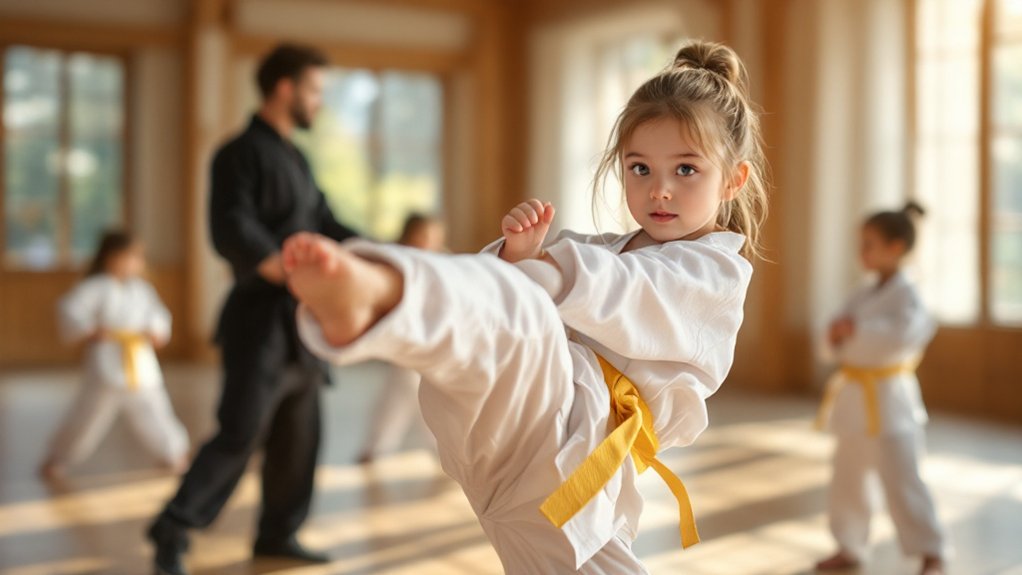
Your kid needs two or three taekwondo classes a week to make real progress, and I learned that when my son forgot his first form after one Saturday class. By Wednesday, it was gone. I thought, “Did we waste the morning?” Frequency beats length, so short, regular sessions win. Add 10–20 minute living-room drills on off days. As belts climb, so should the schedule, but there’s a smart way to ramp up without burning out.
Key Takeaways
- Kids should train two to three times weekly, since consistent frequency builds muscle memory better than longer but infrequent classes.
- Short 10–20 minute home drills on off days, focusing on stances and blocks, reinforce basics between classes.
- Training should increase with belt level: 3–4 sessions weekly for Yellow to Blue, and 4–5 for Black belt preparation.
- Limping, dread of class, or crankiness signal overtraining, while stalled skills and stagnant kicks suggest undertraining.
- Rest days and 9–12 hours of nightly sleep support muscle repair, skill consolidation, and injury prevention.
How Many Taekwondo Classes a Week Do Kids Need?
Usually, the first question parents ask me at the dojang door is, “How many classes does my kid really need?” I asked the same thing years ago, standing in a drafty strip-mall lobby while my seven-year-old tugged at her stiff new uniform. I soon discovered that structured repetition is what forms the neural pathways behind lasting muscle memory, so frequency matters more than most parents realize. Here’s what I learned.
Aim for two or three classes a week. Once a week, my daughter forgot her forms by Thursday. That’s skill retention slipping away, and I watched her frustration grow. Class frequency beats class length. Steady attendance pays off at every rank, since the Taekwondo belt system works as a roadmap where each new color marks a milestone in skill development. On off days, you can add ten-minute drills in the living room. Parent involvement matters. Your cheering really counts.
How Often Should Kids Train at Each Taekwondo Belt?
Every belt asked something different of my daughter, and her training schedule had to change with it. Working toward each new rank showed her that belt progression instills the dedication needed to keep pushing past her limits.
| Belt Stage | Weekly Sessions |
|---|---|
| White → Yellow | 2–3 plus 10–20 minute drills |
| Yellow → Blue | 3–4, about 3–4 hours total |
| Blue → Black prep | 4–5 plus daily stretching |
You’ll notice frequency beats long sessions. Early on, our home drill routines happened in the kitchen after dinner. Those short sessions focused on holding Chunbi ready stance and Ap Seogi with proper foot placement, building the solid base she’d need for advanced movements later. Later, I thought, can she handle five days? She could. Track belt specific milestones, film her forms every 4–6 weeks, and let the instructor judge testing readiness. Don’t rush it. She’s proudest of the belts she earned slowly.

Two students. One great deal.
Start your Taekwondo journey together at Briargate Taekwondo. Get 2 memberships for the price of 1 plus 2 uniforms—for two students in the same household.
Is Your Child Doing Too Much Taekwondo or Too Little?
When my daughter started begging to train every single day, I didn’t know whether to cheer or worry. By week three, she was limping after Tuesday sparring and dreading Thursday forms. Those were overtraining signs, and I’d missed them. Was I pushing too hard?
We scaled back to three sessions weekly. Watch your child closely. Crankiness, dread, and lost excitement are mental burnout indicators. Too little training shows up differently, as skill stagnation, when kicks stop improving between belts. Consistent practice builds the swift, explosive hip rotation that makes kicks faster and more powerful, so slow progress here often means sessions are too sparse.
On busy nights, we now do ten minutes: warm-up plus one form. A good warm-up follows a gradual progression from light cardio to stretching to core work, easing young bodies into movement instead of shocking them. Honestly, her instructor’s weekly corrections guide everything else.
Why Do Rest Days Matter for Young Taekwondo Kids?
Scaling back to three sessions fixed her limp, but I didn’t understand why until I asked her instructor after class one Saturday. He smiled and explained it simply. Rest isn’t lazy. It’s where progress happens.
- Growth recovery: Your child’s muscles, bones and tendons repair on off days, which lowers overuse injury risk. On training days, well-fitted gear like knee pads helps prevent knee injuries and enhance stability so those tissues aren’t taking unnecessary hits.
- Motor consolidation: Kicks and forms lock in during sleep and rest, so aim for 9–12 hours nightly.
- Playful rest: Easy walks or gentle stretching keep joints loose without stressing them.
Watch for irritability, sloppy technique or lingering soreness. Those are your cues to add rest. Stress and self-doubt can also impair emotional regulation, so a calm off day gives your child’s mind the same chance to recover as their body.
Two students. One great deal.
Start your Taekwondo journey together at Briargate Taekwondo. Get 2 memberships for the price of 1 plus 2 uniforms—for two students in the same household.
How Can Kids Practice Taekwondo at Home Between Classes?
Most evenings after dinner, my daughter would beg to practice kicks in our cramped living room, and I honestly didn’t know how to help her. So we started small. You don’t need much space, just a yoga mat on a non-slip floor. Keep sessions to 10–30 minutes, three to five times weekly. Her instructor’s weekly report cards also gave us clear character and discipline goals to work on at home.
Warm up, then run short drills on stances and blocks. We used mirror feedback to catch sloppy chambers. Game based repetitions, like “kick when I clap,” kept her laughing. Train both sides, slowly first. Was it working? Monthly videos showed me: absolutely, her form was sharper. That steady home practice also helped her feel ready for promotional belt testing, which happens every three months at the Dojang.
Frequently Asked Questions
You’ll usually reach early belt milestones every 2–6 months, though higher ranks take longer. Your practice consistency matters most, so train two to three times weekly, add short home sessions, and make age adjustments for younger kids.
Yes, Taekwondo’s practical if you pair solo drills with live sparring. You’ll build balance, timing and striking for self defense applications, but you’ll still need to know street legality and adapt techniques for workplace scenarios.
Both help, but taekwondo’s fast kicking drills often suit your hyperactive child better. You’ll want a school that uses clear structure routines, proven focus techniques, and sensory strategies, since class format matters more than style.
You’ll likely find Brazilian Jiu-Jitsu hardest for technical depth, demanding years of mental discipline, while Muay Thai and MMA test your physical conditioning most. Koryu adds cultural context you’ll spend decades mastering. Your criteria decide.
Conclusion
On a Tuesday night, I watched my daughter drag her gear bag to the car, and I learned that more classes don’t mean more progress. For most kids, two or three sessions a week work well. Add rest days, ten minutes of kicks in the living room, and a coach who cares. At Briargate Taekwondo, with over 20 years of Taekwondo experience and a 4.8 Google rating, that’s exactly what families find: a dojang focused on teaching Taekwondo and building a better you in all areas. You’ll know it’s right when your child races you to the dojang door. I asked myself, “Is she happy?” Start there. Keep the rhythm steady, and the belts will follow.
Training is even better with a partner by your side. Bring a sibling or another student from your household and share the journey at Briargate Taekwondo. For a limited time, get two memberships for the price of one, plus two uniforms included. Two students, one great deal. Rise to Your Dreams together.
Two students. One great deal.
Start your Taekwondo journey together at Briargate Taekwondo. Get 2 memberships for the price of 1 plus 2 uniforms—for two students in the same household.