Estimated reading time: 10 minutes
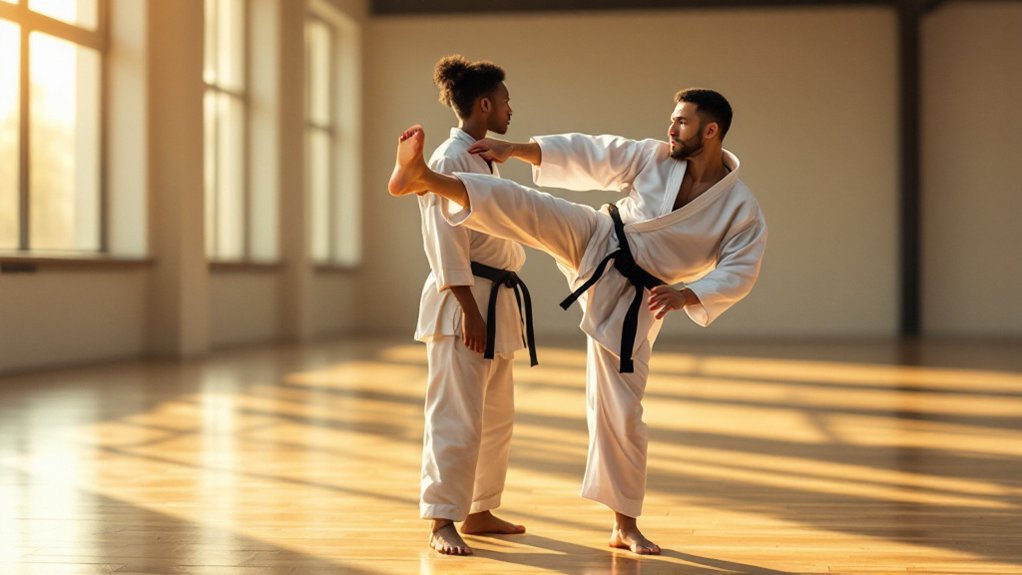
Rushing sloppy reps alone in my garage taught me this: you don’t master Taekwondo through power. You master it through integrity and control. I’d ask myself, “Would I do this in class?” Usually, no. So you start small. Recite the tenets at 6:30 each morning. Log every rep and mistake. Slow your forms to half speed. Keep sparring kicks at 50% power. Own your errors fast. The habits below show how honest training changes everything.
Key Takeaways
- Recite the six tenets each morning and extend discipline beyond the dojang by apologizing sincerely, cleaning up promptly, and thanking others.
- Practice honestly at home by asking, “Would this be done the same in class?” and logging reps and corrected errors nightly.
- Agree on targets, power levels, and stop cues before sparring: 30% for drills, 50% for controlled sparring, 70–90% only for geared, consenting rounds.
- Protect partners by keeping a tight chamber, stopping kicks 10–20 cm from target, and snapping back within 0.5 seconds.
- Earn belts honestly by tracking attendance and mistakes, aiming for 90% pattern accuracy, and knowing your school’s advancement requirements.
Live the Taekwondo Tenets Inside and Outside the Dojang
When I first stepped into First Taekwondo on a rainy Tuesday night, I thought the tenets were just words we’d shout before bowing out. I was completely wrong.
Daily recitation of all six, from Modesty to Indomitable Spirit, slowly rewired my habits. You’ll feel it too.
Then Dr. Amara asked about my home etiquette. Did I bow, say “yes ma’am,” listen fully? Honestly, no.
So start tonight: apologize when you’re wrong, clean up promptly, thank your server. Taekwondo’s emphasis on discipline and self-control is meant to extend beyond the dojang into daily life, shaping how you treat people at home and in public.
These small victories add up, which may be why 93% of martial artists report lasting life improvements from practicing respect and self-discipline.
And remember, earned respect beats demanded respect. Rank won’t make people honor you. Your consistent, thoughtful choices will. That finally changed me.
Practice Taekwondo Honestly When No One’s Watching
Honestly, my sloppiest kicks happened in my own garage, where nobody could see me cheat. I’d rush through fifty front snap kicks, call it a hundred, and quit. Then my instructor noticed.
So I built a quiet ritual. I bowed before the concrete floor, tied my dobok, and checked my breath before every kick. Syncing breath with movement boosts energy and sharpens focus, so each rep counts. You can do this too. Prop your phone up for mirror feedback. Log your reps and corrected errors each night.
Solo accountability felt awkward at first, almost silly. Now I ask myself, “Would I kick like this in class?” That kind of honest self-assessment helps me recognize progress and set new goals for continuous improvement. Lately, my answer keeps getting better.
Two students. One great deal.
Start your Taekwondo journey together at Briargate Taekwondo. Get 2 memberships for the price of 1 plus 2 uniforms—for two students in the same household.
Own Your Mistakes Instead of Making Excuses
Later, I tracked mistakes by date, drill, and cause. Those training logging patterns showed me I rushed when tired. Viewing each error as a learning opportunity builds mental resilience and fortitude, which helps you handle challenges with focus and clarity. Own it, fix it, and grow faster.
Show Up When You Promise Your Instructor and Partners
Owning mistakes helped, but showing up mattered just as much.
I learned Punctual Commitment the hard way, rushing into the dojang at 6:02 when class started at six. You’ll want to arrive 5–10 minutes early to bow in and warm up. Arriving on time matters because each class opens with a purposeful warm-up that moves gradually from light cardio to stretching to core work, easing your body into movement instead of shocking it.
Partner Reliability came next. When I skipped two Thursday drills, my partner Jake sparred a stranger, and I felt awful. Should I just text? Yes, you should. Tell your instructor ahead, with your reason and return date.
Attendance Accountability matters, since instructors track it for belt progress. Some schools even send home weekly report cards that track progress in character and discipline, so consistent attendance shows up in more than just your technique. Confirm tournaments early, too. Showing up builds trust, safety, and skill.
Earn Every Belt Honestly at Taekwondo Testing
Showing up built my habits, but testing day showed me whether I’d actually earned my next belt. At Grand Valley Taekwondo, I’d watched a classmate get held back for skipping bows. That stuck with me.
So I tracked every class, asked my instructor for clear goals, and hit 90% accuracy on my pattern steps. Was I ready, or just hoping? That question built my testing mindset. Earning a new belt involves rigorous training, proficiency demonstration, and sometimes formal testing, so every step had to be truly mastered.
You’ll feel tempted to rush, but belt integrity means you earn the rank before wearing it. Governing bodies like the ITF, WT, and ATA each set their own belt advancement requirements, so knowing your school’s standards helps you measure real readiness. Apologize when you’re wrong. Clean up after yourself. That’s honest progression. Examiners always notice that inner change.
Two students. One great deal.
Start your Taekwondo journey together at Briargate Taekwondo. Get 2 memberships for the price of 1 plus 2 uniforms—for two students in the same household.
Use Deep Belly Breathing to Stay Calm Under Pressure
Breathing was the one skill I never thought I’d need to learn. Then, at my green belt test, my chest locked up and my kicks went sloppy. Dr. Amara pulled me aside. “Belly, not chest,” she said. Now I teach you what she taught me.
Inhale through your nose for four seconds, hold for two, exhale for eight. That’s diaphragm conditioning, ten minutes daily, hand on your stomach. Use box breathing between rounds as breath count anchors. Before reacting, take three full breaths. Practice competition cueing during partner drills. I whisper “center.” You’ll feel your racing heart slow down. This kind of controlled breathing builds the emotional self-regulation that serves as the foundation of mental resilience in martial arts.
Turn Frustration Into Fuel for Harder Training
I used to think frustration meant I was failing. Then one Tuesday night at First Taekwondo, after missing my tenth roundhouse, I stopped. *Breathe, I told myself.* Breath counting saved me: six slow seconds in, then I counted reps instead of mistakes.
You can do this too. Set micro goals, like fifty perfect kicks with a clean chamber and full hip rotation. Write your numbers down. Review them weekly. Seeing 15% improvement felt better than any trophy.
When anger flares, return to fundamentals drills, a hundred stance-and-strike combos. After sparring losses, shadowbox three minutes, then stretch. Your frustration becomes fuel.
Slow Down Your Forms to Build Precision
When my instructor watched me rush through Koryo one Saturday morning, she didn’t say a word. She set a metronome to 50 BPM and pointed. Humbling? Absolutely. That’s where my rhythm cultivation began.
Try it yourself: run five to ten reps at half speed. Hold each shift for two seconds, checking your hips, shoulders, and 60/40 weight split. That’s micro adjustments practice.
Film yourself from the front and side, then review frame by frame at 60 fps. Add visualization pairing, picturing each strike’s target.
Finally, follow three slow runs with one full-speed run. You’ll feel precision turn into power.
Control Your Kicks to Keep Sparring Partners Safe
Years ago, during a Tuesday night sparring class, I landed a roundhouse kick full force on my partner’s ribs. He folded. My stomach dropped. What did I just do? That night, I rebuilt my habits, and you can too.
Start drills at 30% power, controlled sparring at 50%, and save 70–90% for geared, consenting full-contact rounds. Watch your foot positioning: chamber tight, stay within 10–20 cm of the target. Sharpen your reaction timing by snapping back within half a second.
Practice contact etiquette. Agree on targets, power, and stop cues first. Your partner trusts you. Earn it, every round.
Two students. One great deal.
Start your Taekwondo journey together at Briargate Taekwondo. Get 2 memberships for the price of 1 plus 2 uniforms—for two students in the same household.
Carry Taekwondo Discipline Into School, Work, and Home
That same control doesn’t stay on the mat, and I learned this the hard way.
Last spring, I snapped at my sister over dishes, then bowed to Dr. Amara an hour later. Hypocrite, I thought. So I changed.
Each morning at 6:30, I recite the tenets before breakfast. You can too. Use mindful shifts: count three breaths before walking into class, work, or a tense kitchen. Practice respectful communication by saying “yes ma’am” to your boss or parents. Build goal setting routines, like 30-minute focused study blocks, and skip your phone until you finish. When you’re wrong, apologize sincerely.
Frequently Asked Questions
You’ll often quit when discipline feels forced, repetition bores you, or progress stalls. Strained instructor relationships, poor peer dynamics, and missing home support push you away. Burnout prevention and goal resetting help you stay committed.
Taekwondo’s five key rules are courtesy, integrity, perseverance, self-control, and indomitable spirit. You’ll live them through Respect rituals like bowing, steady breath control under pressure, and mental focus that helps you choose honesty before acting.
You’ll master taekwondo through nine secrets: mental focus, balance drills, breathing techniques, visualization training, core strengthening, partner etiquette, high-volume basics, daily stretching, and tenet recitation. Practice them consistently, and they’ll soon become your instinctive strength.
You say “hi” with a martial salute: stand at attention, bow from the waist, and say “yes, sir” or “yes, ma’am.” Proper bow etiquette means you’ll keep eye contact during gym introductions, showing you’re sincere.
Conclusion
I still remember failing my green belt test on a cold Saturday in March. I wanted to quit. Instead, I came back Monday and slowed my forms down. You’ll face moments like that too. When you’re tempted to cut corners, ask yourself, “Would I do this if Dr. Amara were watching?” Own your mistakes, control your kicks, and keep your promises. You don’t just earn belts that way. You build a life you’re proud of.
At Briargate Taekwondo, we’ve spent over 20 years helping students do exactly that. We teach Taekwondo while building a better you in every area of life. It’s why families have given us a 4.8 Google rating. And the journey is even better with someone by your side. Right now, two students in the same household can train together for the price of one, and both get a free uniform. Grab a sibling, a parent, or a partner, and Rise to Your Dreams together at Briargate Taekwondo.
Two students. One great deal.
Start your Taekwondo journey together at Briargate Taekwondo. Get 2 memberships for the price of 1 plus 2 uniforms—for two students in the same household.