Estimated reading time: 6 minutes
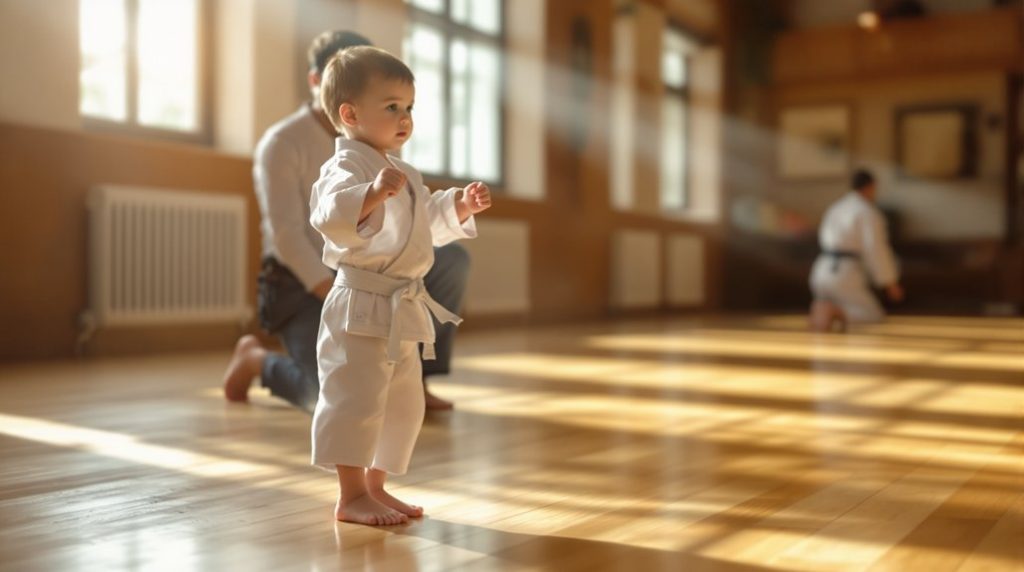
Your child’s readiness for martial arts isn’t just about turning a certain age. Most programs welcome kids around 4–5, but age alone doesn’t tell the whole story. Watch how your child handles frustration, follows two-step instructions, and balances on one foot. Can they stay focused for 20–30 minutes? Do they recover quickly after a tough moment? Those signals matter more than birthdays. Keep going, and you’ll find everything you need to make the right call.
Key Takeaways
- Most children are ready to begin martial arts between ages 4–6, though emotional and physical readiness matters more than age alone.
- A ready child can follow two-step instructions, stay focused for 20–30 minutes, and handle frustration without prolonged meltdowns.
- Physical readiness includes running and jumping without stumbling, balancing on one foot, and mirroring simple movements after watching others.
- Choosing the right martial art matters; energetic kids may suit Taekwondo, while thoughtful children often thrive in Brazilian Jiu-Jitsu.
- Before the first class, obtain any required medical clearance and consider attending a free trial or readiness assessment session.
What Age Is Right to Start Martial Arts?
Honestly, it’s not a one-size-fits-all answer. Most programs suggest ages 4–5 for early development basics—think fun movement, personal space, and confidence.
By 6–9, kids handle peer interaction and real techniques better. At this stage, children can begin learning fundamental stances and kicks that build balance, stability, and physical strength.
But here’s what I’ve learned: watch your child first. Can they follow two-step instructions? Sit through short activities? Show genuine interest? Those signs matter more than age.
For children with ADHD or ASD, structured programs offer predictable routines that reduce anxiety and support skill acquisition at an individualized pace.
Find an instructor whose qualifications match your child’s level, and you’ll know when the timing feels exactly right.
Signs Your Child Is Emotionally Ready for Martial Arts
Honestly, age isn’t always the clearest signal that your child is ready for martial arts—emotional readiness is. Watch how they handle frustration. Can they calm down within a few minutes after a tough moment? That’s emotional resilience showing up.
Notice if they’re patient during turn-taking or show peer empathy when a classmate struggles. These moments matter deeply. Self-awareness skills appear when your child stops, listens, and adjusts their behavior after redirection. Children who thrive in structured settings often respond well to clear social scripts like bowing and responding to instructors, which build confidence in knowing exactly what to expect.
If they can follow two-step instructions and stay focused for 20–30 minutes, they’re genuinely ready to grow inside a dojo. Children who struggle with emotional control may also benefit from the deep breathing techniques taught in taekwondo, which serve as practical tools for managing stress and composure during overwhelming moments.
Does Your Child Have the Physical Coordination to Start?
Watching your child attempt a cartwheel or hop on one foot tells you a lot about where they’re physically. Balance milestones and playground coordination reveal readiness more than age alone. Movement rhythms matter too—can they follow a sequence without completely falling apart?
Look for these signs they’re physically ready:
- Runs and jumps without constant stumbling
- Stands on one foot for a few seconds
- Mirrors simple movements after watching you
- Stops moving when you say “freeze”
- Takes turns during active play without melting down
These small victories signal their body’s ready to learn. In Taekwondo, even beginner students practice fundamental stances that demand the kind of one-foot balance and body awareness your child is already building on the playground. As they progress, synchronization of movements becomes increasingly important, helping children develop the fluidity and coordination that carries over into everyday physical activities.
Which Martial Art Is Actually Right for Your Child?
How do you even begin picking the right martial art when they all seem kind of the same from the outside? Trust me, they’re not. Your child’s style preferences, learning goals, and the class atmosphere all matter. Energetic kids who love jumping thrive in Taekwondo.
Thoughtful, puzzle-solving kids often love Brazilian Jiu-Jitsu around age six. Traditional Karate builds real discipline early, starting at four. Judo teaches body control safely. Taekwondo stands apart as Korea’s national sport and has been recognized at the Olympic level since 1988, giving young athletes a path rooted in global tradition.
MMA’s better saved for teens with mature impulse control. Watch a class. Notice your child’s eyes—are they lighting up? That reaction tells you everything you need to know. In Taekwondo specifically, kicks become more powerful and precise when young athletes learn hip rotation techniques that drive speed and impact from the very beginning.
What to Bring and Expect at Your Child’s First Martial Arts Class
That first class day can feel like a lot to figure out, but let’s break it down so you’re not scrambling in the parking lot. Arrive 10–15 minutes early, handle any signed forms at the desk, and let your child soak in the space before it fills with noise and movement.
Here’s what to pack and expect:
- A labeled water bottle your child can grab quickly
- Comfortable, non-restrictive clothes or a beginner uniform
- Medical clearance if the school requires it
- Warm-up expectations: movement, drills, games, then cool-down feedback
- A quiet mindset—watch, encourage effort, skip the pressure
Many schools offer a free readiness assessment before committing, which can help you and your child feel confident walking through the door on day one. Classes also tend to build discipline and focus gradually, giving children a foundation that supports not just their training but their everyday habits and routines as well.
Frequently Asked Questions
What Is the Best Age for a Child to Start Martial Arts?
Most kids thrive starting at 4–5, when they’ve developed motor skills, a growing attention span, and social readiness. But don’t stress—your child’s unique personality and ability to follow directions matter more than age alone.
What Does the Bible Say About Martial Artists?
The Bible doesn’t mention martial artists directly, but from a Christian perspective, it values strength used righteously. Biblical principles encourage self-control and protecting others. Through faith integration, you’re shaping a child with disciplined, humble, God-honoring character.
Can a 7 Year Old Get a Black Belt in Taekwondo?
Yes, your 7-year-old can earn a junior black belt! Schools vary in age limits and belt standards, so check with your dojo. With dedication, they’ll build tournament readiness and typically achieve it around ages 10–12.
Is 12 Too Old to Start Martial Arts?
No, 12 isn’t too old! You’ll find martial arts welcomes late blooming athletes beautifully. Your child thrives alongside peers, benefits from teaching discipline, and avoids adult class dynamics while building confidence, strength, and real skills fast.
Conclusion
Your child doesn’t need to be perfect to start. They just need to be ready enough. Watch for the signs, trust your gut, and pick a class that fits who they actually are right now. That first bow on the mat might feel small, but it can change everything. You’re not signing them up for a sport. You’re giving them a foundation they’ll carry for life.
At Briargate Taekwondo, that foundation is built with purpose. With over 20 years of Taekwondo experience and a 4.8-star Google rating, our dojang focuses on more than kicks and forms—it’s about building a better you in every area of life. Our slogan, Rise to Your Dreams, isn’t just words on a wall. It’s the standard we hold every student to, from the very first class.